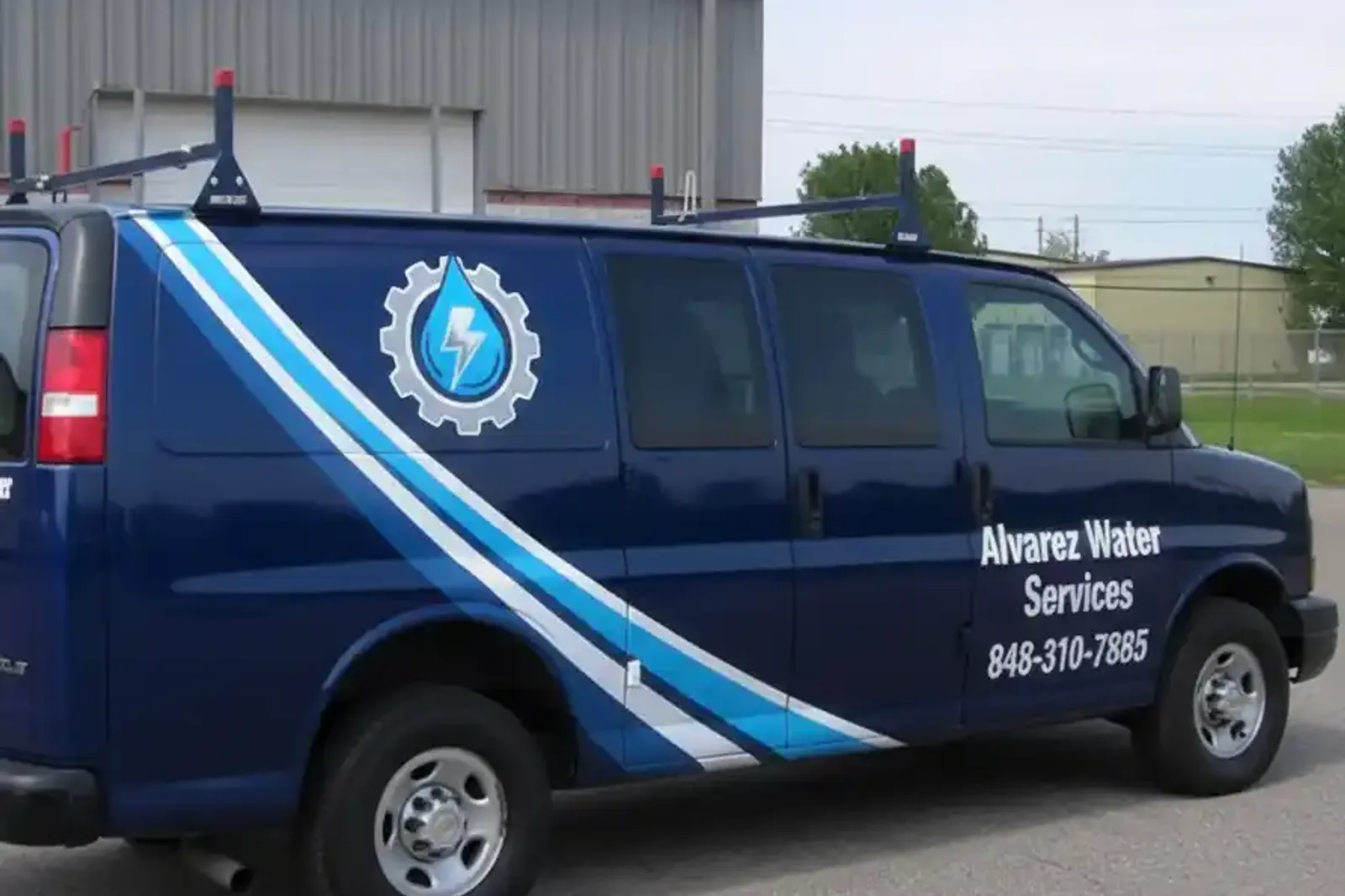
When water gets loose inside a Monmouth County property, the visible puddle is the smallest part of the problem. Alvarez Water Services starts every job by metering the wet footprint, pulling standing water with truck-mounted extraction, and setting a drying plan tuned to your wall assembly. We track moisture daily so the structure leaves dry by the numbers, not dry to the touch, and we hand you readings you can show an adjuster. The first hours decide how much of your Red Bank home we save, because water that is still spreading is still adding rooms to the job; the faster we extract, the smaller the loss stays. We work the way an honest restorer should: save the materials that can be saved, remove only what has to come out, and prove every step with a meter instead of a guess. Call 848-310-7885 and a Red Bank crew is dispatched fast.
- 24/7 emergency dispatch
- Truck-mounted extraction
- Industrial drying equipment
- Daily moisture documentation
- Insurance scope-aligned reconstruction
- IICRC S500 protocol
The Drying Process — What "Documented Dry" Actually Means
"Dry" is not "feels dry" or "looks dry." It is a specific moisture content reading for each substrate, measured with calibrated meters, that matches the manufacturer-approved dry standard for that material. Hardwood is different from drywall is different from concrete subfloor. We measure each separately, daily, until every wet substrate has returned to baseline.
The equipment that gets us there: high-velocity air movers (one per ~150 sqft of affected area) that move moist air off the substrate; LGR (low-grain refrigerant) dehumidifiers that pull that moisture out of the air; and HEPA-filtered negative air units when we need to contain a category-3 cleanup or prevent cross-contamination across rooms. All running continuously, monitored daily, repositioned when readings stall.
What clients sometimes ask: can the equipment run quieter? Yes — for occupied spaces we use noise-managed scheduling (loud during business hours, quiet overnight). What clients sometimes ask: can we just open the windows and skip the dehumidifier? No — outside humidity averages 60-80% in NJ, which means evaporated moisture from your substrate has nowhere to go and re-condenses. The dehumidifier exists specifically to extract the moisture from the air after the air movers release it from the substrate.
Why The First 60 Minutes Decide Everything
Most water-loss damage happens AFTER the visible event ends. The pipe bursts and you see the water. You shut it off. You think the worst is behind you. The actual restoration cost is decided by what happens in the next 60 minutes — whether moisture migrates into wall cavities, subfloor, and ceiling spaces before drying equipment can stop it.
Drywall wicks moisture upward in the first hour. Subfloors absorb downward. By hour 24, materials that were not even visibly wet have measurable moisture content above the dry standard. By day three, microbial growth starts on materials that the homeowner thinks are fine. The cost difference between a same-hour response and a next-day response on the same loss is often 3 to 5x — not because the work is more expensive, but because more material has to come out and go back in.
Our Red Bank dispatch is real 24/7 — a human answers the call, gets the address and loss type, and rolls a truck while we are still on the phone with you. Pre-staged equipment for known surge periods (winter freeze events, named storms) means individual response times do not slip even when call volume spikes across Monmouth County.